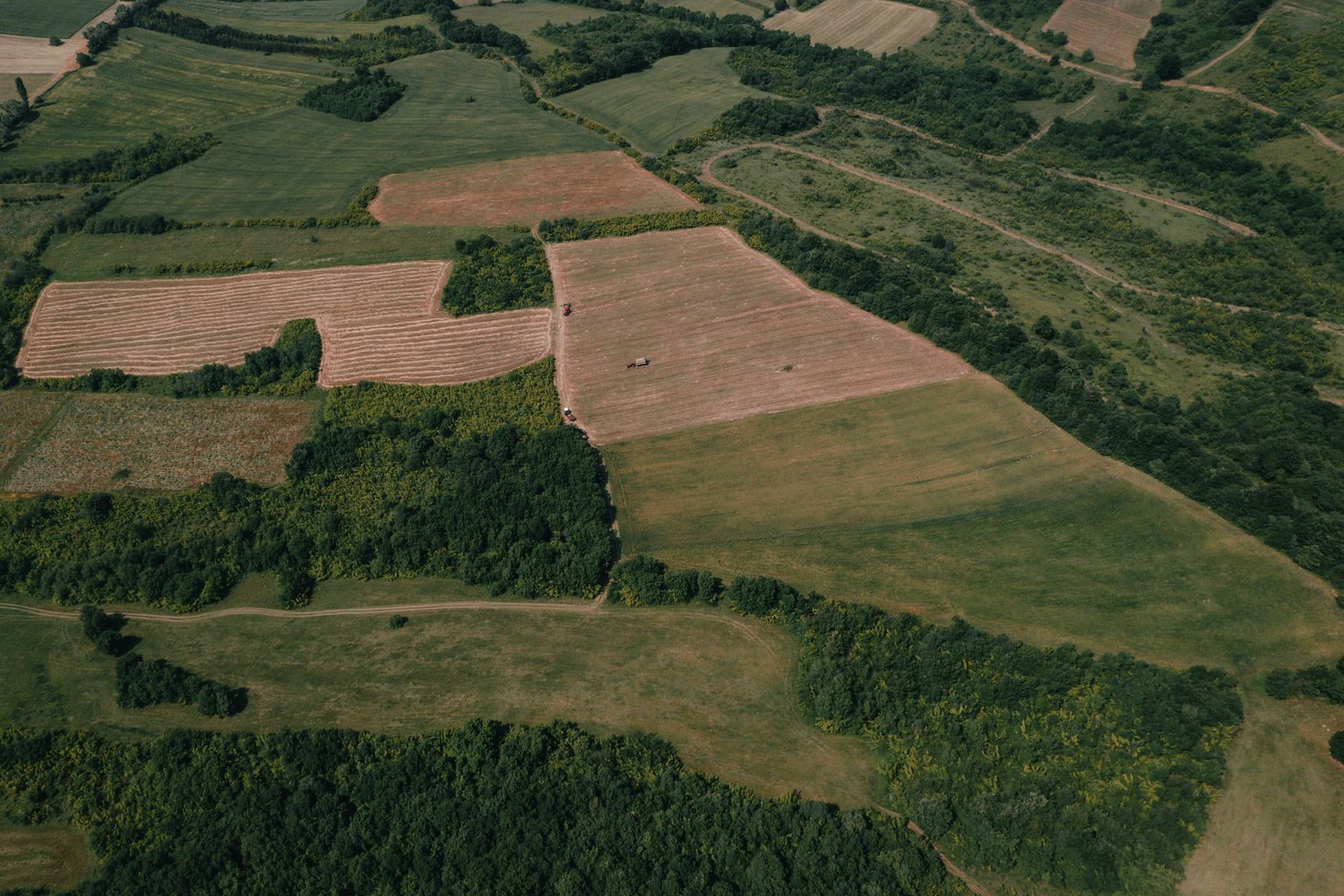
Of root ecology before the first prototype
Origin
Seven years of research at CIRAD
Christophe Jourdan is a research director at CIRAD, in the Eco&Sols unit in Montpellier. Since he was hired in 1996, he has studied the architecture and dynamics of root systems in the tropics, from Côte d'Ivoire to Vanuatu, from Senegal to India. Thirty years of fieldwork, always with the same starting tool: the soil pit.
Digging to observe a root is expensive, damages the plot, and can never be repeated under the same conditions. After hundreds of pits dug around the world, Christophe reaches the conclusion that every field researcher faces when running into the limits of their own tool: it had to change.
From 2017, within the laboratory, Christophe designed a waterproof optical sensor, built to be buried for the long term and to automatically photograph the interface between the soil, the roots and their inhabitants. This sensor would later be named Scanorhize®.
First sensor buried at CIRAD
Sensors tested on 4 continents
What the technology changes
A sensor that stays in the ground changes the nature of what we can know. Three peer-reviewed publications, built from Scanorhize® data, document what continuity makes visible.
YOLOv5 · Deep learning
Soil fauna detected by software
Identifying soil invertebrates by eye across thousands of images is slow and error-prone. A team combining Humeos and CIRAD trained a deep learning model (YOLOv5) to automatically detect these organisms in the sensor images, paving the way for systematic, large-scale counting free of observer bias.
Illustration
16 taxa · 3 months
A phenology, not a snapshot
By photographing the same soil spot several times a day for three months, a study revealed a peak in root growth in late May–early June, followed by a peak in mycorrhizal colonization in mid-June, and documented the specific phenology of 16 different invertebrate taxa. None of this is visible in a one-off measurement.
Illustrative diagram
85% of volume lost at harvest
A root tracked, not a destroyed sample
In 2025, a study individually tracked roots from their appearance to their decomposition. Result: fine roots (under 0.3 mm) decompose more slowly than thick roots, and 85% of root volume is already lost at harvest. A result impossible to obtain with standard litter bags, which destroy the sample at each measurement.
Illustrative diagram
Scientific publications
- Pruvost, E., Tulet, H., Delort, E., Shokouh, G. S., Montesinos, P., Magnier, B., Jourdan, C., Belaud, E., Hedde, M. (2022). Invertebrates detection with YOLOv5: towards study of soil organisms using deep learning. 10th European Workshop on Visual Information Processing (EUVIP), IEEE.(opens in a new tab)
- Belaud, E., Jourdan, C., Barry-Etienne, D., Marsden, C., Robin, A., Taschen, E., Hedde, M. (2024). In situ soil imaging, a tool for monitoring the hourly to monthly temporal dynamics of soil biota. Biology and Fertility of Soils, 60(8), 1055–1071.(opens in a new tab)
- Siegwart, L., Saimpha, G., Bertrand, I., Hedde, M., Jourdan, C. (2025). High-throughput monitoring of root diameter reveals the temporal dynamics of root decomposition. Annals of Botany, 136(5–6), 1163–1173.(opens in a new tab)
Field journal
Lots to write about in our journal.
Our news is currently being written.